Finding the best demand forecasting software requires looking beyond simple trend lines. You need a system that integrates external signals, handles massive SKU counts, and delivers actionable intelligence in weeks, not years. This guide examines the top forecasting solutions available today and highlights the pros and cons to help you make the most suitable decision for your business.
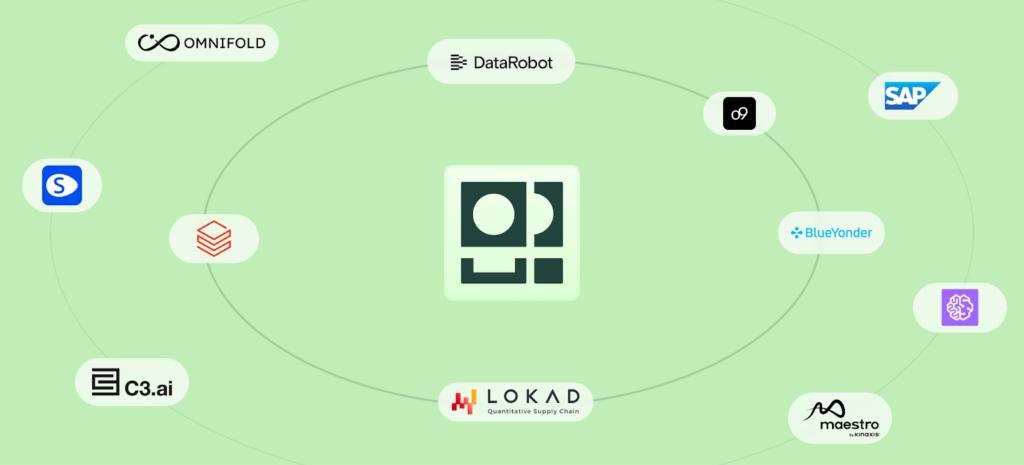
| Leading demand forecasting tools | Key features |
| Demand Forecast AI | Baseline forecast generation at SKU-location scaleDriver-level explainability for every predictionConfidence scoring with “no-touch” recommendations |
| SAP Integrated Business Planning (IBP) | AI-assisted forecasting optionScenario planning supportSAP ecosystem integration |
| Blue Yonder Demand Planning | Item-level forecastingProbabilistic forecasts ML-driven feature engineering |
| o9 AI/ML demand forecasting | Ensemble modeling approachForecast value add (FVA) tracking supportModel explainability |
| Kinaxis Maestro | Demand forecasting with MLSignal ingestion supportWorkflow integration |
| Amazon SageMaker | Model training for forecastingAWS-based scalabilityModel deployment tooling |
| Lokad | Probabilistic forecasting approachUncertainty distribution outputsDecision-oriented modeling framework |
| DataRobot | Automated time-series modelingMulti-series forecasting supportPrediction interval outputs |
| Databricks | Demand forecasting accelerator assetsLakehouse data preparation workflowsScalable compute for training |
| C3 AI | Enterprise data unification layerHierarchical forecasting supportForecast explanation artifacts |
| GMDH Streamline | Statistical forecasting methodsImport/export connectorsManual adjustment controls |
| Omnifold | Supply chain network modelingExternal signal incorporationForecasting automation claims |
Review the best companies for demand forecasting to inform your decision.
1. Demand Forecast AI
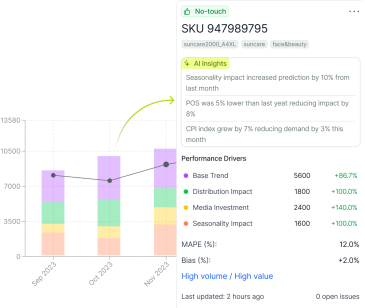
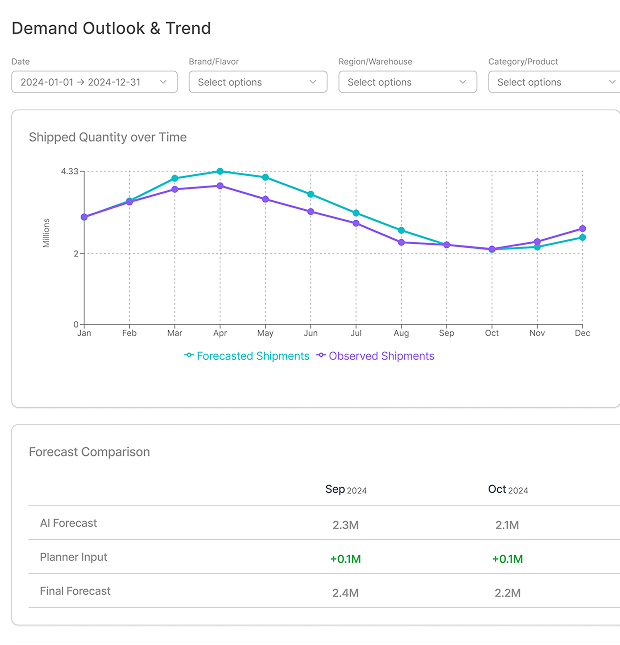
Demand Forecast AI is an embedded predictive GenAI tool developed by Pecan that generates baselines and accurate demand forecasting for large-scale supply chain organizations. Instead of replacing ERPs and other solutions, Demand Forecast AI integrates with your existing planning environment, so planners consume predictions within their current process – no need to switch between tools.
The Demand Forecast AI team builds supply chain models, so you don’t need to have an in-house data science team to implement the solution. Planners receive accurate, AI-generated forecasts directly in their existing work tools, enabling immediate adoption and benefit without extensive internal build or maintenance effort.
Demand Forecast AI pros:
- Embedded baseline forecast that fits existing IBP/S&OP planning cycles
- Reduced planner workload on large SKU-location portfolios
- Audit-ready performance measurement (MAPE, weighted MAPE, bias, FVA)
Best for: Large enterprises with established ERPs needing high-accuracy, AI-driven forecasts without a full system replacement or hiring a data team
Book a Demand Forecast demo to experience a leading provider of demand surge predictions.
2.SAP Integrated Business Planning (IBP)
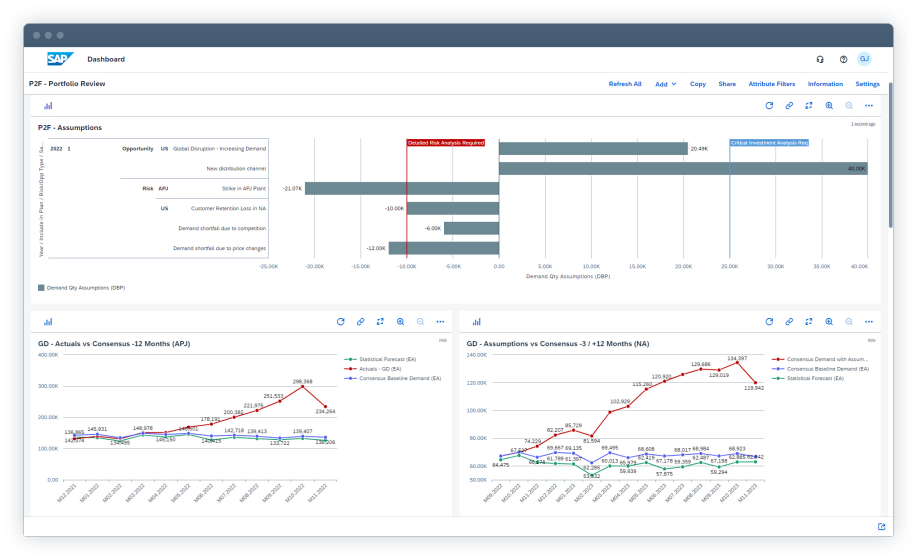
SAP IBP generates consensus forecasts and integrates them into downstream supply and finance cycles. The planning suite supports scenario analysis and forecast collaboration, though teams often invest significant time in managing data readiness, configurations, and governance across modules.
SAP IBP pros:
- Native integration with the SAP planning cycles
- Shared workflow for sales and supply inputs
- Standard enterprise controls for planning changes
SAP IBP cons:
- Long setup and admin effort if you’re not on the SAP ecosystem
- Broad suite scope that adds work beyond forecasting
- Forecast improvements often depend on configuration quality
Best for: SAP-centric organizations that prioritize native integration across their supply chain and finance modules
3.Blue Yonder
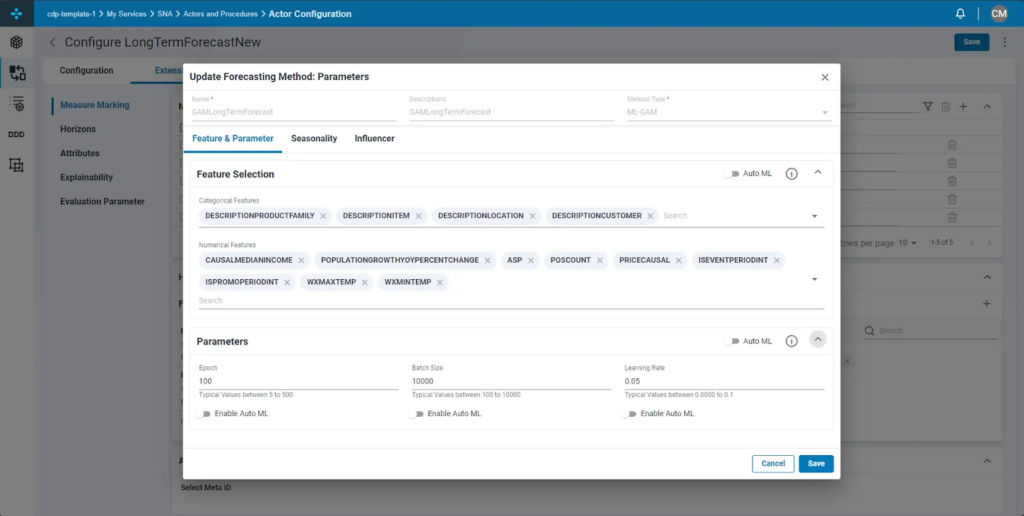
Blue Yonder supports demand planning teams requiring forecasts across extensive item-location networks and formal exception management. The supply chain platform enables planners to address forecast issues, though teams may experience extended enablement and tuning periods before achieving process stability.
Blue Yonder pros:
- Fit for large item-location portfolios
- Exception workflow for planner routines
- Planning platform alignment for enterprise programs
Blue Yonder cons:
- Rollouts require heavy configuration and change management
- Broader planning scope that can dilute forecasting focus
- Ongoing tuning burden for many organizations
Best for: Retail and high-volume consumer goods brands needing item-level granularity and automated exception management
4.o9 AI/ML demand forecasting
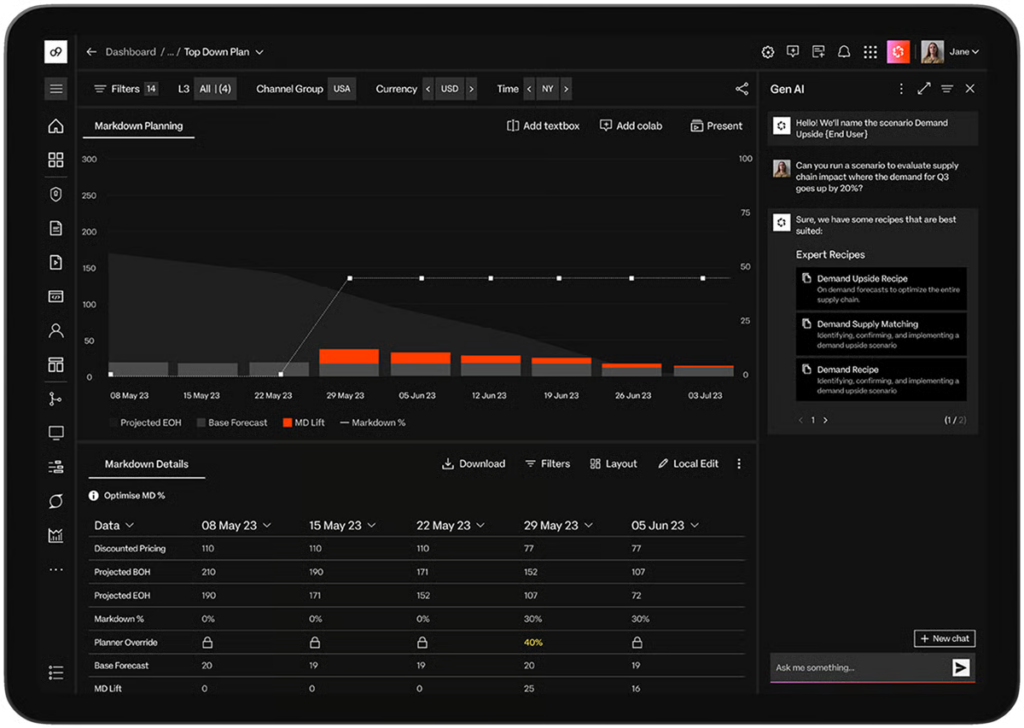
The o9 AI/ML demand forecasting tool allows teams to review drivers, challenge assumptions, and align across functions during prediction cycles. The solution handles forecast governance practices; however, planning teams often face a meaningful setup effort to match the workflow to real planning cadence.
o9 AI/ML pros:
- Forecast review workflows
- Governance concepts
- Platform connectivity across planning domains
o9 AI/ML cons:
- High configuration effort to match real planning processes
- Adoption friction if you only want forecasting
- Platform complexity that increases admin dependency
Best for: Global enterprises in volatile markets that need to model complex, multi-tier supply chain relationships and track specific human vs. machine performance
5.Kinaxis Maestro
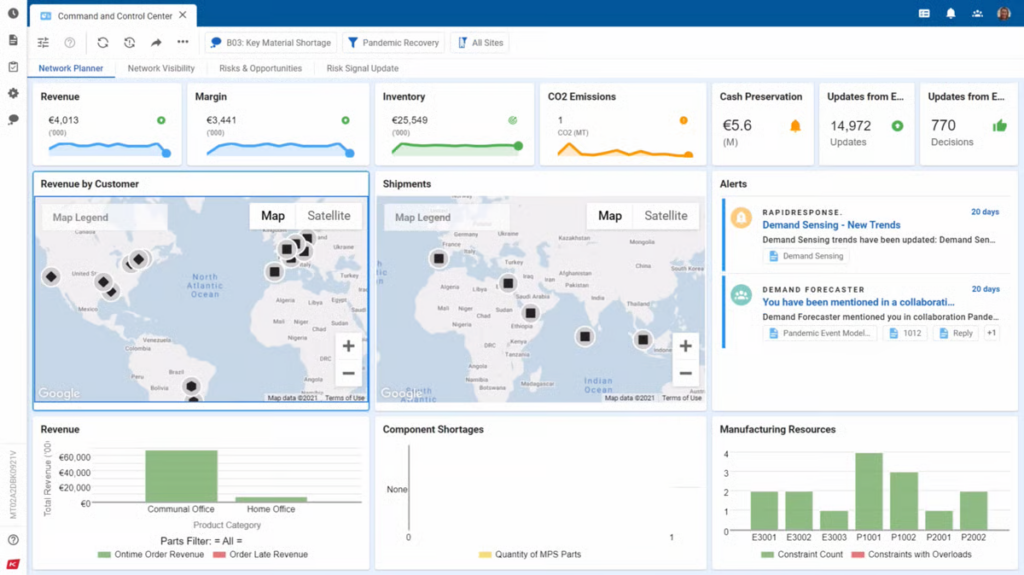
Kinaxis developed a platform for supply chain orchestration called Kinaxis Maestro. Within Maestro, planners count on an ML set to automate data preparation and demand forecasting. While the environment helps teams propagate changes to predictions across planning workflows, the program often requires broader, complex process alignment beyond demand forecasting.
Kinaxis Maestro pros:
- Workflow integration
- Connection to wider planning execution
- Fit for cross-functional planning
Kinaxis Maestro cons:
- Change-management load across stakeholders
- Learning curve for planning operations and governance
- Program scope that can exceed forecasting needs
Best for: Complex manufacturing and high-tech firms that need concurrent planning
6.Amazon SageMaker
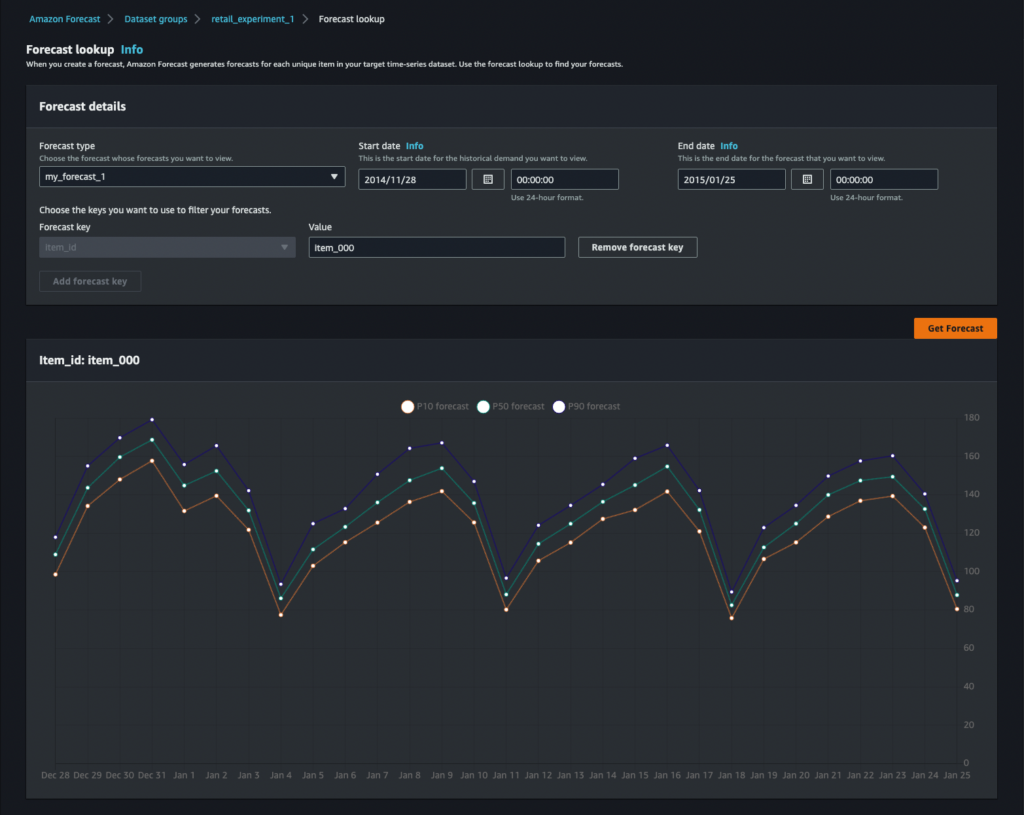
Amazon SageMaker helps data science and engineering teams build forecasting models and push predictions into planning tools through custom pipelines. The AWS service can scale compute and deployment, but demand planners usually rely on a separate layer for dashboards, override workflows, and review context.
Amazon SageMaker pros:
- Custom forecasting using Amazon Forecast within AWS
- Scalable training and inference on AWS
- Production deployment tooling for engineering teams
Amazon SageMaker cons:
- Heavy internal ownership for model lifecycle work
- Planner workflow and UI built outside the service
- Longer path to value without a packaged planning experience
Best for: Organizations with mature ML engineering teams who want to build, train, and own proprietary forecasting models
7.Lokad
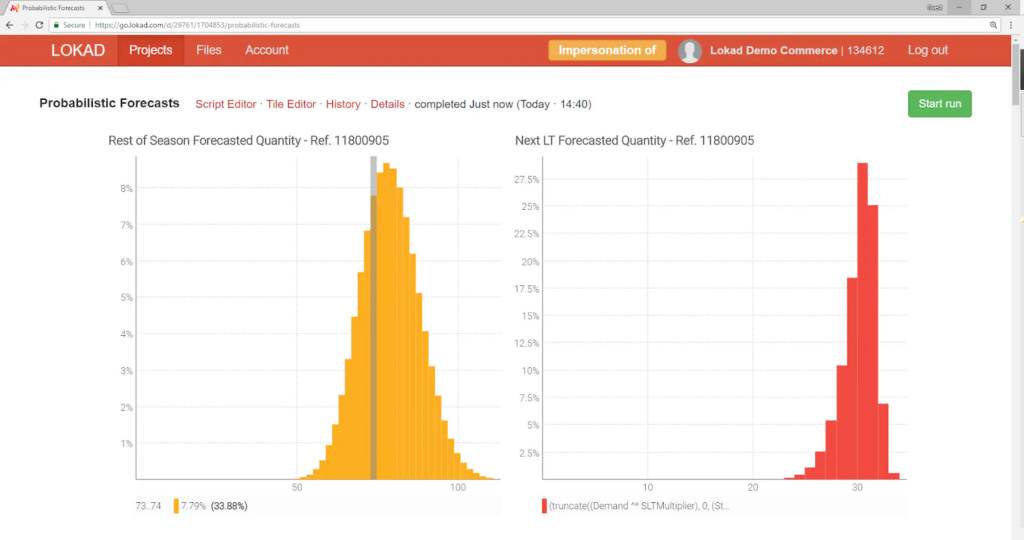
Lokad is a software for demand forecasting that delivers ranges and probabilities for supply chains, helping planners reason about risk. While Lokad’s approach supports decision conversations around uncertainty, many planning teams need time to operationalize probabilistic outputs inside existing demands.
Lokad pros:
- Probabilistic outputs for risk-aware decisions
- Fit for intermittent demand patterns
- Decision-oriented modeling approach
Lokad cons:
- Training and adoption effort for point-forecast cultures
- Operating model changes to use probabilities in planning
- Higher analytics maturity requirements for full value
Best for: Specialized supply chains facing high uncertainty, such as aerospace or spare parts, where understanding risk ranges is more important than single-point forecasts
8.DataRobot
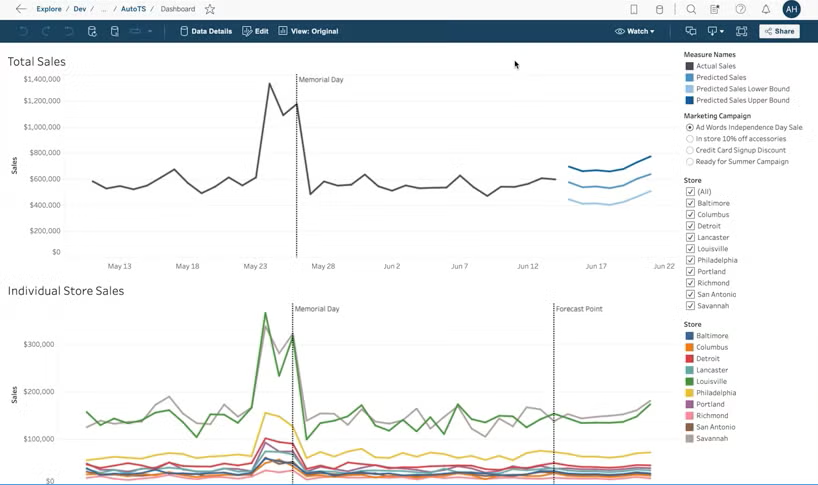
DataRobot builds and deploys time-series models without teams having to hand-code every experiment, then publishes forecasts to business systems. The DataRobot AI platform can do model iteration; however, demand planners still need a supply-chain-facing layer for explanations, overrides, and weekly workflow.
DataRobot pros:
- Model experimentation for analytics teams
- Support for large multi-series forecasting processes
- Deployment options for production predictions
DataRobot cons:
- Planner workflow and dashboards built outside the platform
- Monitoring and retraining ownership for internal teams
- Supply chain context and explanations require extra work
Best for: Analytics-led companies looking to automate the data science lifecycle to iterate on hundreds of different forecasting experiments
9.Databricks
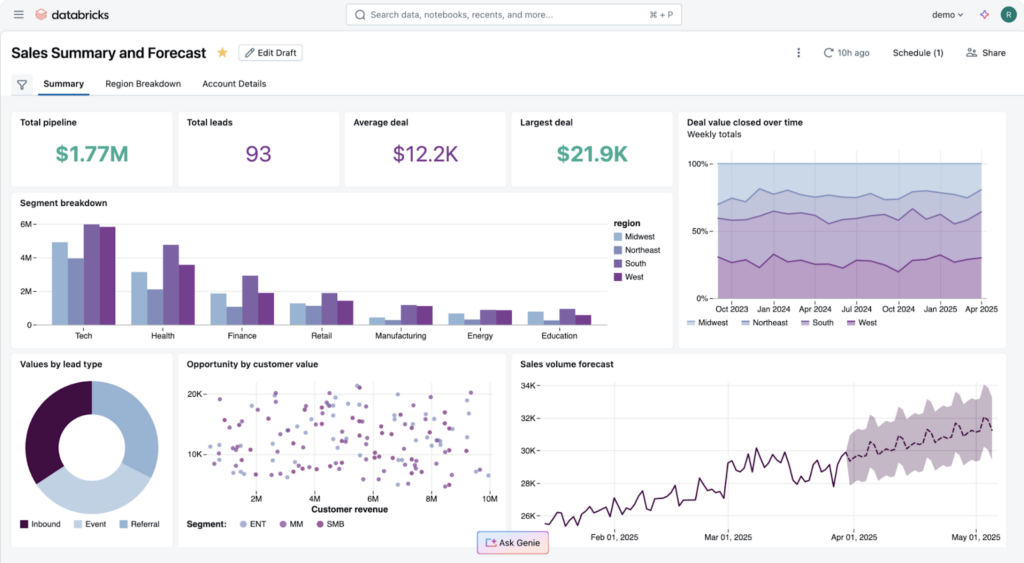
Databricks centralizes demand data and builds forecasting pipelines on a lakehouse architecture, often as part of a broader analytics initiative. The platform enables engineering teams to scale feature preparation and training, though planners require a separate application for forecast review, approvals, and exception handling.
Databricks pros:
- Data foundation for large forecasting programs
- Scalable pipelines for training and scoring
- Useful accelerators for prototyping
Databricks cons:
- Significant build effort for a planner-ready solution
- Business workflow tooling required outside the platform
- High dependency on internal engineering capacity
Best for: Data-heavy enterprises that have centralized their operations on a lakehouse architecture and want to run forecasting directly on their raw data source
10.C3 AI
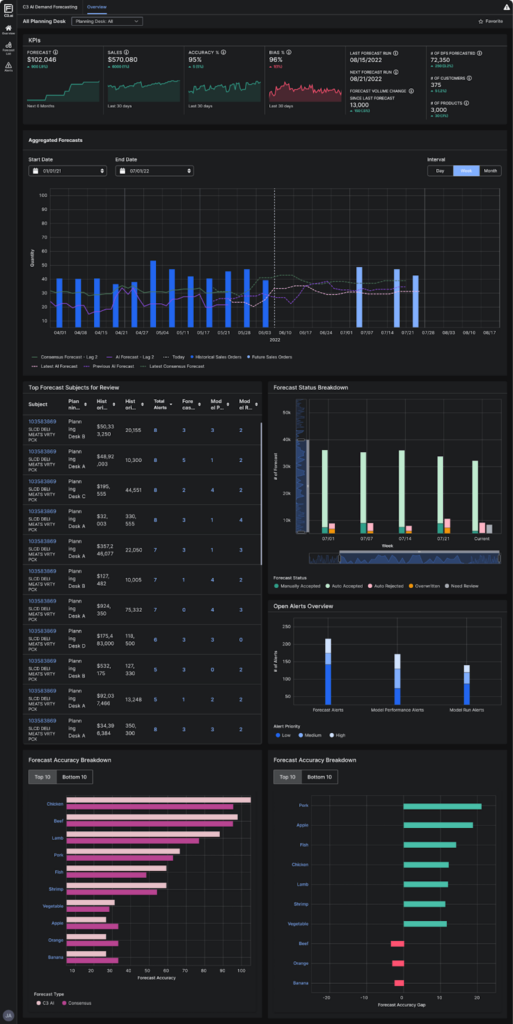
C3 AI offers a packaged AI application for demand forecasting, with enterprise-level integration and governance. While the application layer can help central teams roll out reliable forecasts across business units, many organizations face longer implementation cycles and greater stakeholder management.
C3 AI pros:
- Enterprise application packaging for forecasting
- Fit for multi-business-unit rollouts
- Governance-friendly enterprise posture
C3 AI cons:
- Longer implementation cycles than specialist forecasters
- High program complexity and stakeholder dependency
- Cost overhead for forecasting-only use cases
Best for: Industrial conglomerates seeking a pre-packaged AI application layer that can be standard across diverse, global business units
11.Streamline
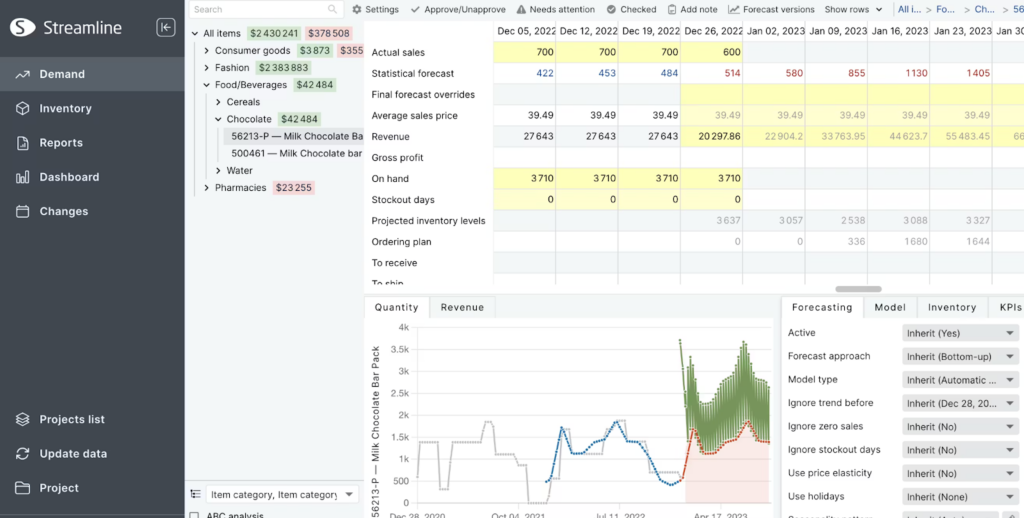
GMDH Streamline creates statistical forecasts from sales history and adjusts them during review when business context changes. The GMDH tool supports a practical spreadsheet-to-tool transition, although teams may outgrow the feature depth when volatility, scale, or explainability expectations rise.
Streamline pros:
- Practical setup for basic forecasting operations
- Support for planner review and manual adjustments
- Accessible option for smaller planning teams
Streamline cons:
- Limited depth for advanced enterprise forecasting needs
- Less robust workflow coverage for complex organizations
- Weaker explainability expectations versus specialist AI tools
Best for: Mid-market companies transitioning from manual spreadsheets to their first planning tool
12.Omnifold
Omnifold positions forecasting within the supply chain network context and in relation to external signals, helping teams explore drivers beyond shipment history. However, rapid expansion into broader optimization programs increases integration demands and makes forecasting operations harder to standardize with this tool.
Omnifold pros:
- Signal support for driver exploration
- Network-aware approach for complex supply chains
- Fit for teams experimenting with signal-rich methods
Omnifold cons:
- High integration dependency for full value
- Scope creep into optimization beyond forecasting
- Higher vendor risk for conservative procurement
Best for: Planning teams focusing on demand sensing through external market signals such as weather, social trends, and geopolitics
Meet your new demand forecasting software
Teams that need demand forecasting software for quick scaling multiple regions usually hit the same wall: inconsistent data, inconsistent overrides, and inconsistent trust in the numbers. Demand Forecast exists to solve this problem by offering:
- Machine learning models and a predictive AI that learn from historical examples to predict the future demand for products
- Forecast operations with confidence signals delivered straight into your current workflows
- Model explainability that explains the key drivers influencing a prediction
- Performance tracking across MAPE, wMAPE, bias, and FVA to measure forecast improvement and planner impact over time
Get to know the best AI demand forecasting system for supply chain management: book a demo now.